MVP development · São Paulo, Brazil

Ideas that go live.

I turn a tight scope into an MVP people actually use — code, database and deployment on your domain, in two weeks.

Operations SaaS Marketplaces Subscription billing Payment & tax integrations AI agents
Selected work

A product is not a pretty screen. It is an operation that closes.

Four products doing real work: selling, invoicing, support, control and billing.

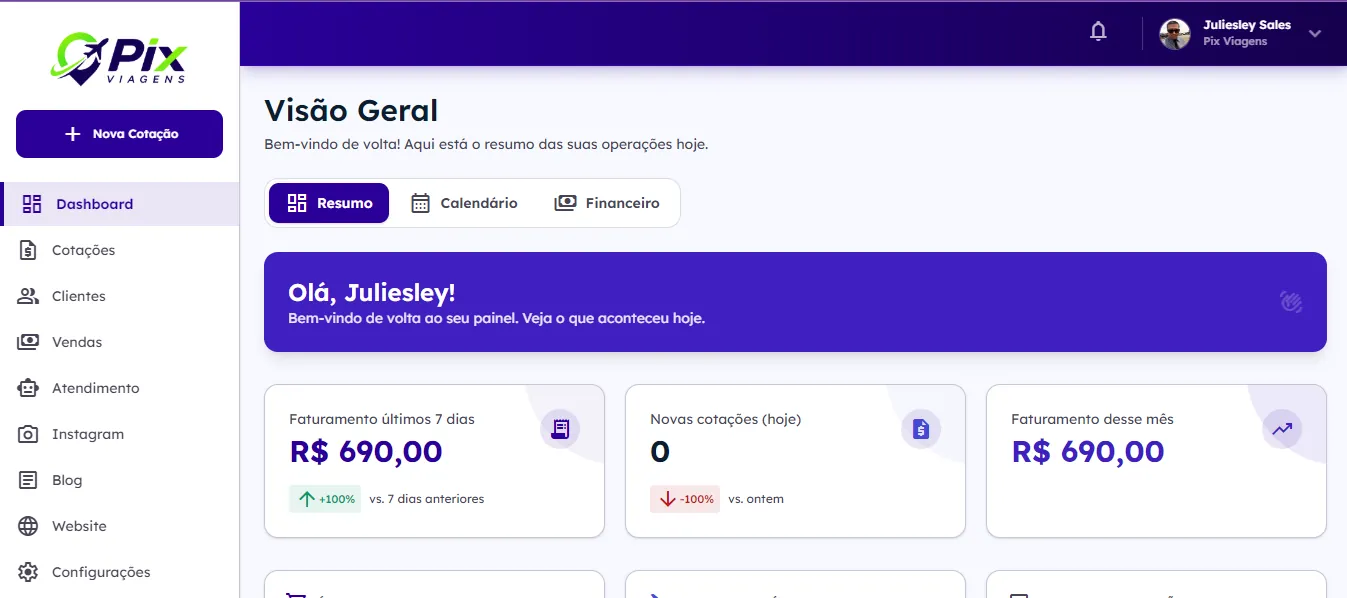
ERP Milhas dashboard showing revenue, quotes for the day and the operations menu.
SaaS · airline miles trading

ERP Milhas

Brazil has a large secondary market for airline miles, where brokers buy points from travellers and resell them as tickets. This runs the whole desk: quoting, issuing and AI agents answering on WhatsApp, in one flow.

Visit erpmilhas.com.br
SaaSAI agentsWhatsApp APISubscriptions
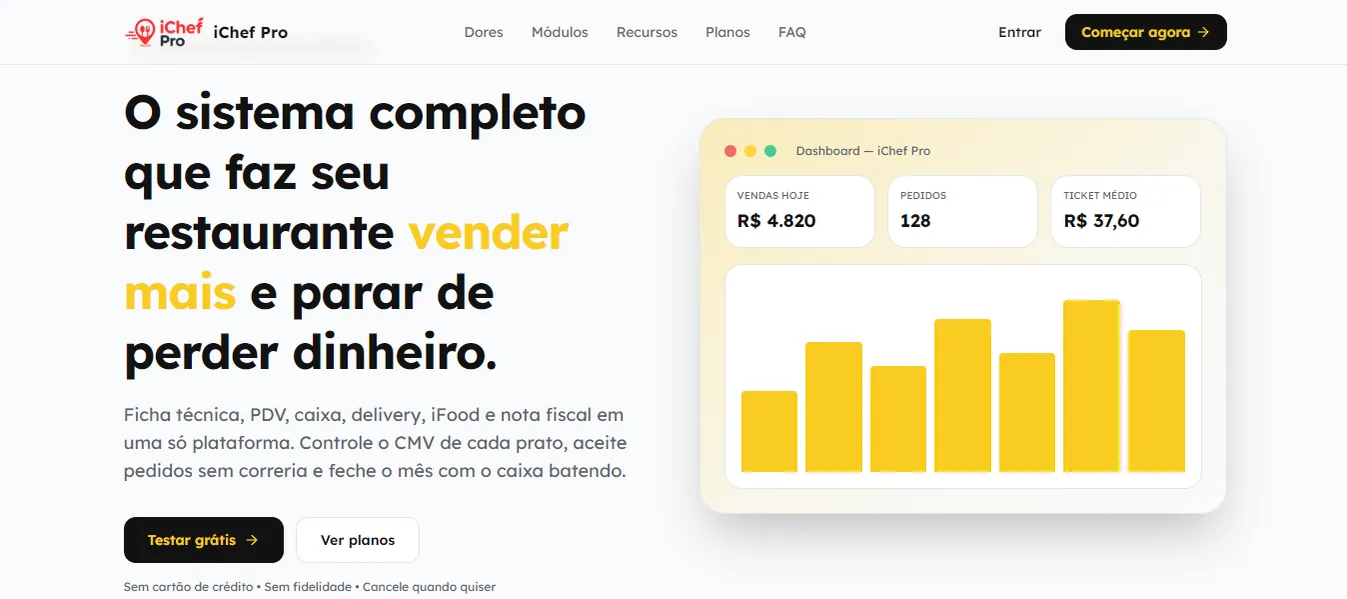
iChef Pro home page with the daily sales panel, orders and average ticket.
Restaurant operations

iChef Pro

Point of sale, recipe costing, delivery and tax receipts for restaurants. It integrates with iFood, the dominant food-delivery platform in Brazil, and issues NFC-e — the electronic receipt every sale legally requires here.

Visit ichefpro.com.br
POSFood costDeliveryTax receipts
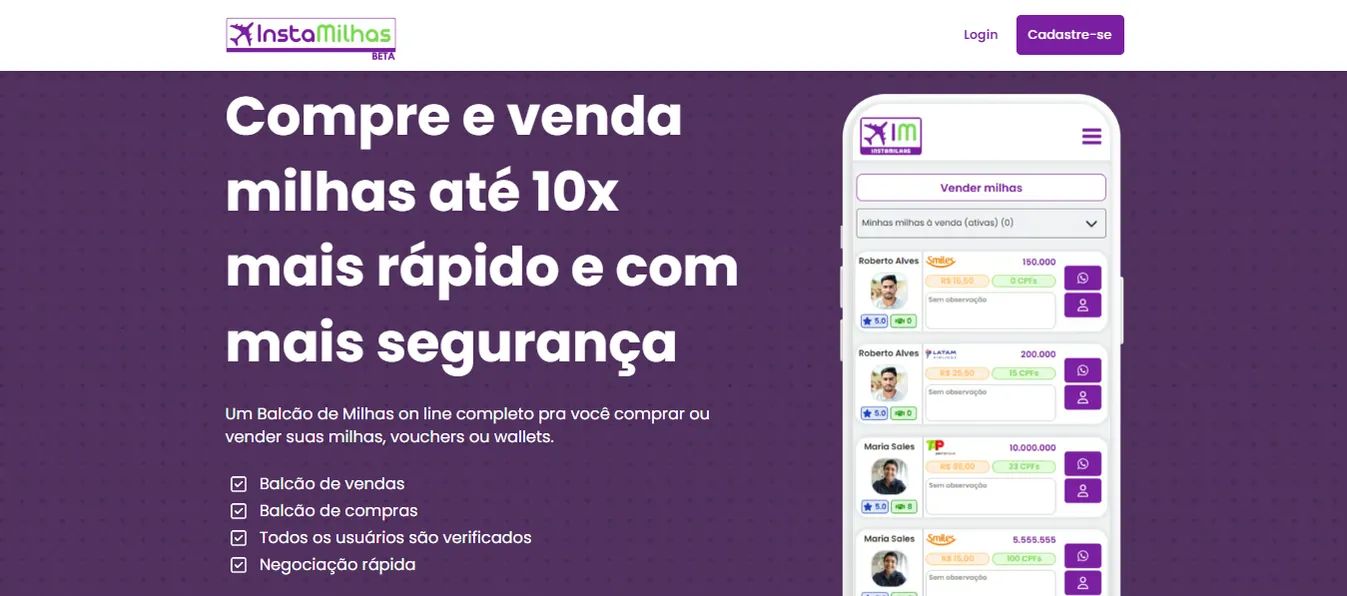
Instamilhas home page with the miles trading desk and listings from verified sellers.
Two-sided marketplace

Instamilhas

A marketplace matching buyers and sellers of airline miles, with verification and reputation rules holding the trade together. Both sides are live in production — the hard part of any marketplace, solved in practice rather than on paper.

Visit instamilhas.com
MarketplaceTwo-sidedReputation
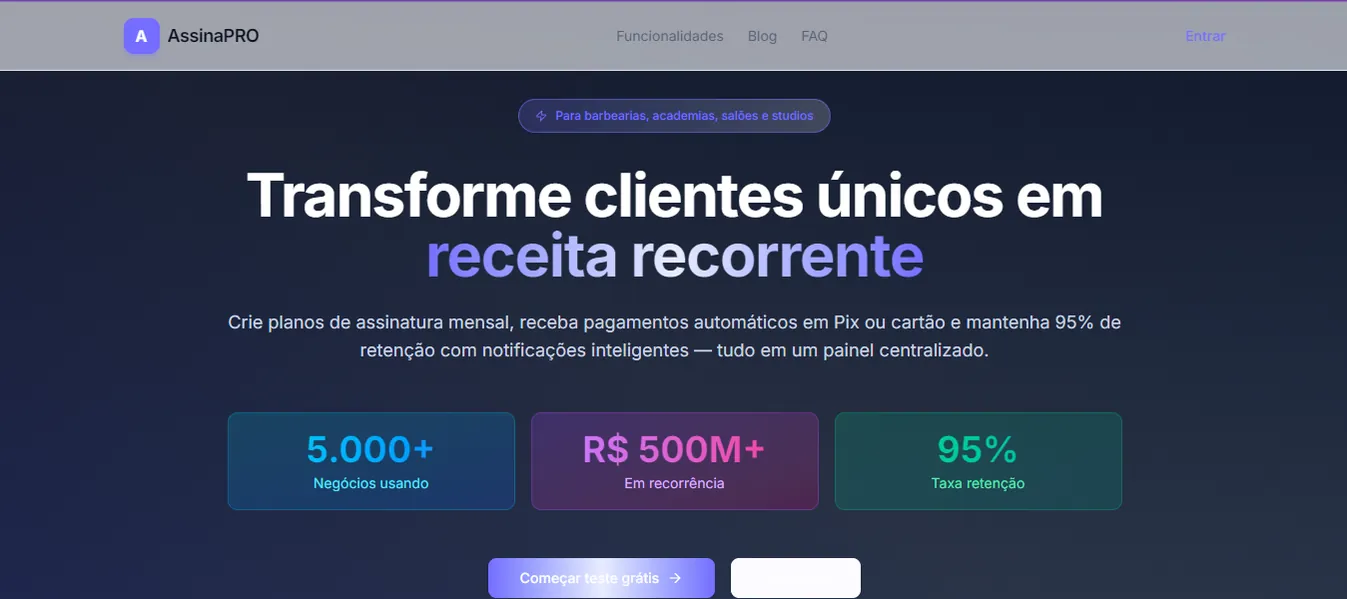
AssinaPRO home page with its recurring revenue pitch for local businesses.
SaaS · subscription billing

AssinaPRO

Lets local businesses — barbershops, gyms, studios — sell monthly plans and collect automatically through Asaas, a Brazilian payments provider. Turns one-off visits into predictable revenue, with a dashboard for the owner.

RecurringPaymentsOwner dashboard
The method

Fourteen days work when the scope holds.

The process is built to remove uncertainty before the first line of code — and to keep what happens next visible.

Day 00

Scope locked

One call turns the idea into a scope cut, a definition of done and a delivery plan.

Day 01–02

Architecture and direction

Data model, core flows and visual language come back as one concrete proposal to approve.

Day 03–09

Building in the open

The product grows in a live preview. You see the work as it happens, instead of waiting for a reveal.

Day 10–12

Test and adjust

You test the agreed flow and send the round of refinements included in the scope.

Day 13–14

Deploy and handover

Production on your domain, every account in your name, and a walkthrough to get you running.

The limits that protect the deadline

What is in is clear. So is what is out.

A closed scope is not rigidity. It is the condition for shipping fast without discovering the real cost halfway through.

Included

  • Up to ten screens and two access roles
  • Database and authentication
  • One well-defined external integration
  • Responsive layout and production deploy
  • One round of refinements

Quoted separately

  • Native iOS and Android apps
  • Migrating an existing database
  • Complex legacy integrations
  • Multi-tenant and white-label
  • Ongoing support after handover
Juliesley Sales, developer, arms folded in an office.
Who builds it

Juliesley Sales

Developer in São Paulo, Brazil. I build operations software for businesses that run on it — from database flows to payments to the experience of the person using it all day.

I use AI-assisted development to cut the repetitive work, not to skip decisions. Architecture, code and delivery stay the responsibility of one person: me.

You talk to the person who designs and builds your product, from day one through deployment.

Investment

A price on the page, not a surprise in the proposal.

One scope, one price, agreed before anything starts.

Fixed-scope MVP

$900

$1,500
Introductory rate for approved case studies.

A delivery with defined edges.

Price, deliverables and responsibilities go into the contract before we begin. If the project needs more than the cut allows, the next step is a separate proposal — not a mid-project surprise.

  • 50% on scope agreement, 50% on delivery
  • Every account and service in your name
  • Source code and documentation handed over
After v1

The product doesn’t stop on day 14.

Once the MVP is delivered and running, what comes next is continuous evolution. That’s what a second format is for: you book development days each month, with priorities you set at every cycle.

It isn’t support and it isn’t hourly work. It’s reserved capacity on my calendar, with a delivery every two weeks.

  • 8 development days reserved per month
  • 3-month minimum
  • Available if you’ve already done an MVP Sprint or already have a product in production

From $1,400 per month.

If it makes sense for your case, we’ll talk about it at delivery — no need to decide now.

Before we talk

Questions that save us a pointless meeting.

Why does this cost less than an agency?

Different structure. You hire one person who decides and executes the agreed scope, with no agency layer between the decision and the code. I also work from São Paulo, where my cost base is lower than in the US or Western Europe. The lower price comes from that — not from cutting steps.

Are two weeks really enough?

For a well-defined cut, yes. The deadline is protected by limiting scope and by fast decisions, not by a vague promise of "a complete system". If your idea does not fit in two weeks, you find that out in the scoping call, before spending anything.

Is the result no-code?

No. The stack is React, TypeScript and Supabase: conventional, version-controlled code, handed to you when the work is done.

Can I keep developing it afterwards?

Two options. You keep evolving it with me through reserved days each month, in the format described just above. Or you take the code to another developer — which is exactly why the delivery includes an architecture document and deployment instructions.

How do we work across time zones?

São Paulo is UTC−3: a normal working day here overlaps with all of Europe's morning and with the US East Coast from midday. Written updates land daily either way, so progress never waits on a call.

Next step

Let us find out if it fits in two weeks.

A 30-minute call to assess the scope cut. If it does not fit, you will know before you invest anything.

Your details stay with me and are used only to answer this request.